

Advanced Radiation Therapies for Pet Cancer: The Difference Between Targeted and External Beam Radiation
Targeted radiation therapy has emerged as a superior option for treating solid tumors in animals thanks to its precision, safety, and effectiveness. This blog explores targeted radiation such as IsoPet®’s Precision Radionuclide Therapy™ over traditional external beam radiation therapy (EBRT) in managing pet cancer.
Cancer is a leading cause of death in pets, with various types affecting both cats, dogs, horses and exotic animals. As veterinary medicine advances, the options for treating cancer in pets have expanded significantly, providing hope and better outcomes for many animals. Among these options, radiation therapy has become a cornerstone for managing solid tumors. Let’s explore why targeted radiation therapy is considered safer and more effective than traditional external beam radiation for treating solid tumors in pets.

How Does Radiation Help Treat Cancer?
Radiation therapy is a common treatment for cancer in pets, similar to its use in human cancer treatment. Here are some reasons why radiation may be used for treating cancer in pets:
1. Targeted Radiation Treatment:
Radiation can be precisely targeted to cancerous tumors, minimizing damage to surrounding healthy tissues. This precision makes it an effective option for tumors that are inoperable or located in sensitive areas. IsoPet®’s patented Precision Radionuclide Therapy™ is a targeted treatment for solid tumors, often only requiring one treatment to effectively kill the tumor. Targeted radiation is safer for pets because it precisely directs the radiation to cancerous tissues, minimizing exposure and potential damage to surrounding healthy cells. This approach reduces the risk of severe side effects and improves the overall quality of life for pets undergoing treatment.
2. Pain Relief:
In addition to shrinking tumors, radiation therapy can help alleviate pain associated with cancer. This is particularly important for improving the quality of life in pets with advanced cancer.
3. External Beam Radiation:
For some pets, surgery may not be a viable option due to the location of the tumor, the pet’s overall health, or other factors. Radiation such as external beam radiation (EBRT) provides an alternative that can still be effective in controlling the disease but external beam radiation can cause significant side effects, including severe skin burns, inflammation, and damage to healthy tissues surrounding the treatment area. Additionally, pets may experience fatigue, decreased appetite, and potential long-term organ damage with EBRT depending on the radiation’s location and dosage.
4. Combination Therapy:
Radiation is often used in conjunction with other treatments such as surgery and chemotherapy. This multimodal approach can enhance the effectiveness of treatment by attacking the cancer from multiple angles.
5. Control of Local Disease:
Radiation therapy is particularly useful for controlling local disease, preventing tumors from growing or spreading further. This can be crucial for managing the progression of cancer and prolonging the pet’s life.
6. Palliative Care:
Even when a cure is not possible, radiation can be used palliatively to shrink tumors and reduce symptoms, thereby improving the pet’s comfort and quality of life.
Veterinarian oncologists are trained to carefully evaluate each case to determine if radiation therapy, and which type of radiation is appropriate based on the type of cancer, its location, the overall health of the pet, and other individual factors.

The Two Types of Radiation Therapy EBRT & PRnT™
External Beam Radiation Therapy (EBRT)
External Beam Radiation delivers radiation from outside the body using high-energy beams, such as X-rays or protons, to target and destroy cancer cells. It involves directing radiation from an external machine towards the tumor. In respect to treating equine cancer this can pose its own set of challenges. Despite advancements of image guided radiation, some side effects related to tissue damage may still occur.
Benefits of EBRT
– Can treat large areas
– Can shrink a tumor before surgical removal
Limitations of EBRT
– Difficulty targeting only the tumor without affecting surrounding tissues
– Requires multiple sessions
– Challenging for equine cancer treatment due to the size and anatomy of horses
– Side effects such as skin irritation, fatigue, and damage to nearby organs
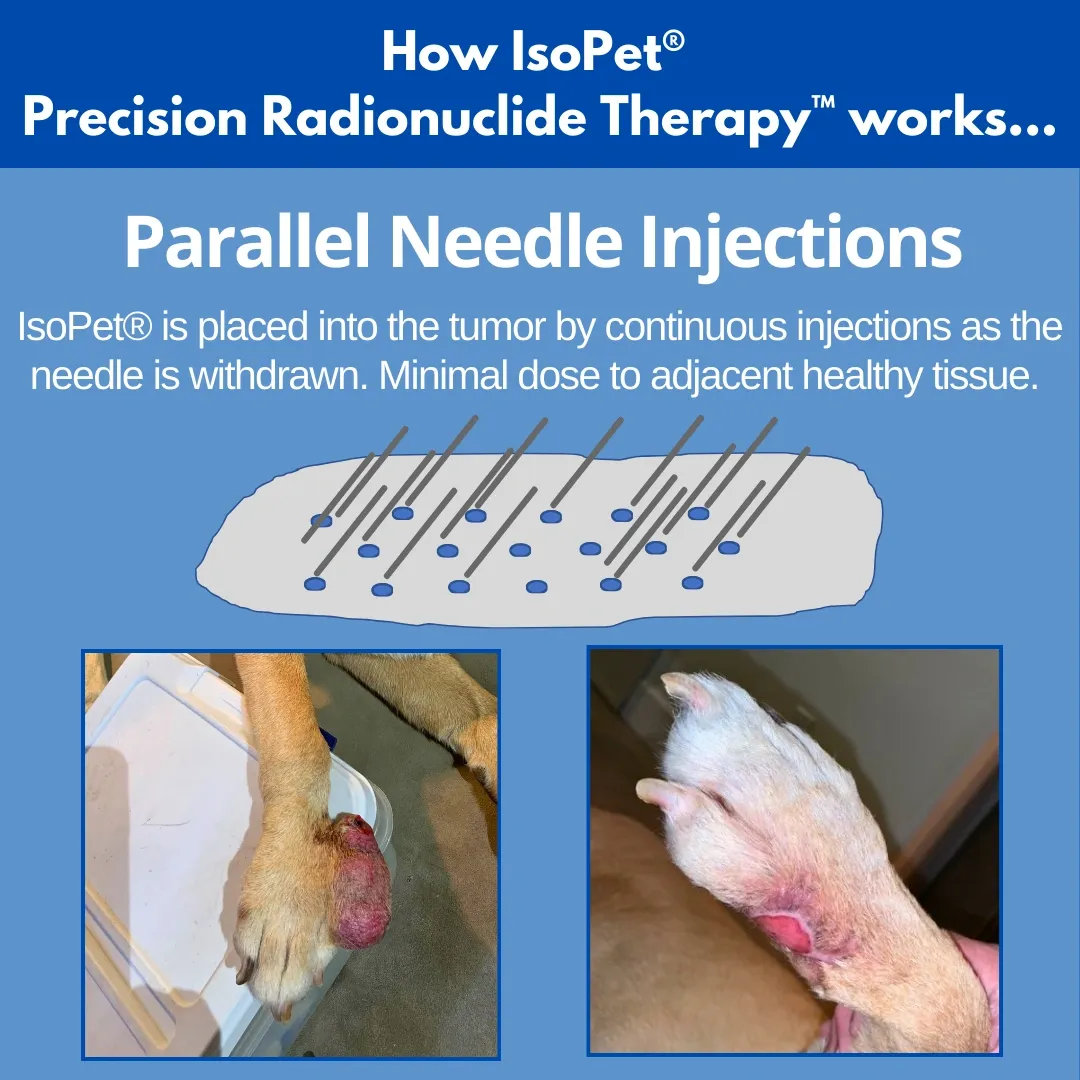
Targeted Radiation Therapy – IsoPet®’s PRnT™
Targeted Radiation Therapy includes advanced techniques such as IsoPet®’s patented Precision Radionuclide Therapy™ which provides a more precise treatment by injecting a radioactive isotope, Y-90, directly into the tumor without harm to surrounding tissues. Targeted radiation is deemed safer because it delivers precise doses of higher levels of radiation (up to 400Gy) to the tumor while sparing surrounding healthy tissue. This precision reduces the risk of side effects and damage to non-cancerous areas, enhancing overall treatment safety and effectiveness.
Benefits of Targeted Radiation such as PRnT™
–PRnT™ is an advanced treatment that delivers higher doses of radiation with pinpoint accuracy often in one session.
–PRnT™ places radioactive material (Y-90) directly inside or near the tumor, effectively killing the tumor from the inside out with minimal, if any, side effects.
-PRnT™ is a better option for equine cancer as many veterinary clinics may not have the equipment or space to accommodate large animals.
Limitations of Targeted Radiation
-can be less effective for treating large, diffuse tumors or cancers that have metastasized
Veterinary oncologists advocate for targeted radiation therapy in certain cases of solid cancerous tumors where minimizing the damage to surrounding tissues is critical.

Why Targeted Radionuclide Radiation Therapy and PRnT™ is Safer than EBRT
These five factors demonstrate that targeted radionuclide radiation therapy is safer and more effective when compared to external beam radiation therapy.
1. Precision and Localization
- Precision Radionuclide Therapy™ PRnT™: Uses the radioactive isotope Y-90 that specifically targets cancer cells, minimizing exposure to healthy tissue.
- EBRT: Directs beams of radiation from outside the body, which can be challenging to avoid irradiating nearby healthy tissues completely.
2. Reduced Side Effects
- Precision Radionuclide Therapy™ PRnT™: More localized radiation results in fewer side effects, which is crucial in sensitive areas.
- EBRT: Can cause widespread side effects due to its impact on both the tumor and surrounding tissues.
3. Effectiveness for Specific Cancers
- Precision Radionuclide Therapy™ PRnT™: Effective for cancers with specific markers or receptors.
- EBRT: Used for a wider range of cancers but may be limited by the risk of damaging healthy tissue.
4. Potential for Combination Therapy
- Precision Radionuclide Therapy™ PRnT™: Can be combined with other treatments, such as chemotherapy or surgery, to enhance effectiveness without significantly increasing toxicity.
- EBRT: Also used in combination therapies, but the added radiation burden can limit the extent of additional treatments.
5. Radiation Dose Control
- Precision Radionuclide Therapy™ PRnT™: Allows for controlled delivery of higher doses of radiation directly to the tumor, tailored to specific treatment needs.
- EBRT: Dose modulation is possible but involves complex planning and advanced technology to ensure concentration on the tumor while sparing healthy tissue.

In conclusion, targeted radiation therapy has four main advantages over external beam radiation.
1. Precision: Targeted Radiation Therapy can focus on the tumor with millimeter accuracy, sparing healthy tissue.
2. Reduced Side Effects: Targeted Radiation Therapy limits radiation exposure to healthy areas, minimizing side effects.
3. Efficiency: Targeted Radiation Therapy delivers higher doses in often one session, reducing stress for pets and owners.
4. Accessibility: Targeted Radiation Therapy is a better option for equine cancer over External Beam Radiation which is challenging for equine cancer due to the size and anatomy of horses
Targeted radiation therapy such as IsoPet®’s Precision Radionuclide Therapy™ or PRnT™ represents a significant advancement in veterinary oncology, offering a safer and more effective option for treating solid tumors in pets. By focusing on the tumor with high precision, it reduces side effects and improves outcomes, providing a better quality of life for our beloved animal companions. Early detection of lumps gives your pet the best chance of survival. Ask your trusted veterinarian about your options when treating your pet’s cancer or visit our website www.IsoPet.com for a list of IsoPet® Regional Clinics in your area.